
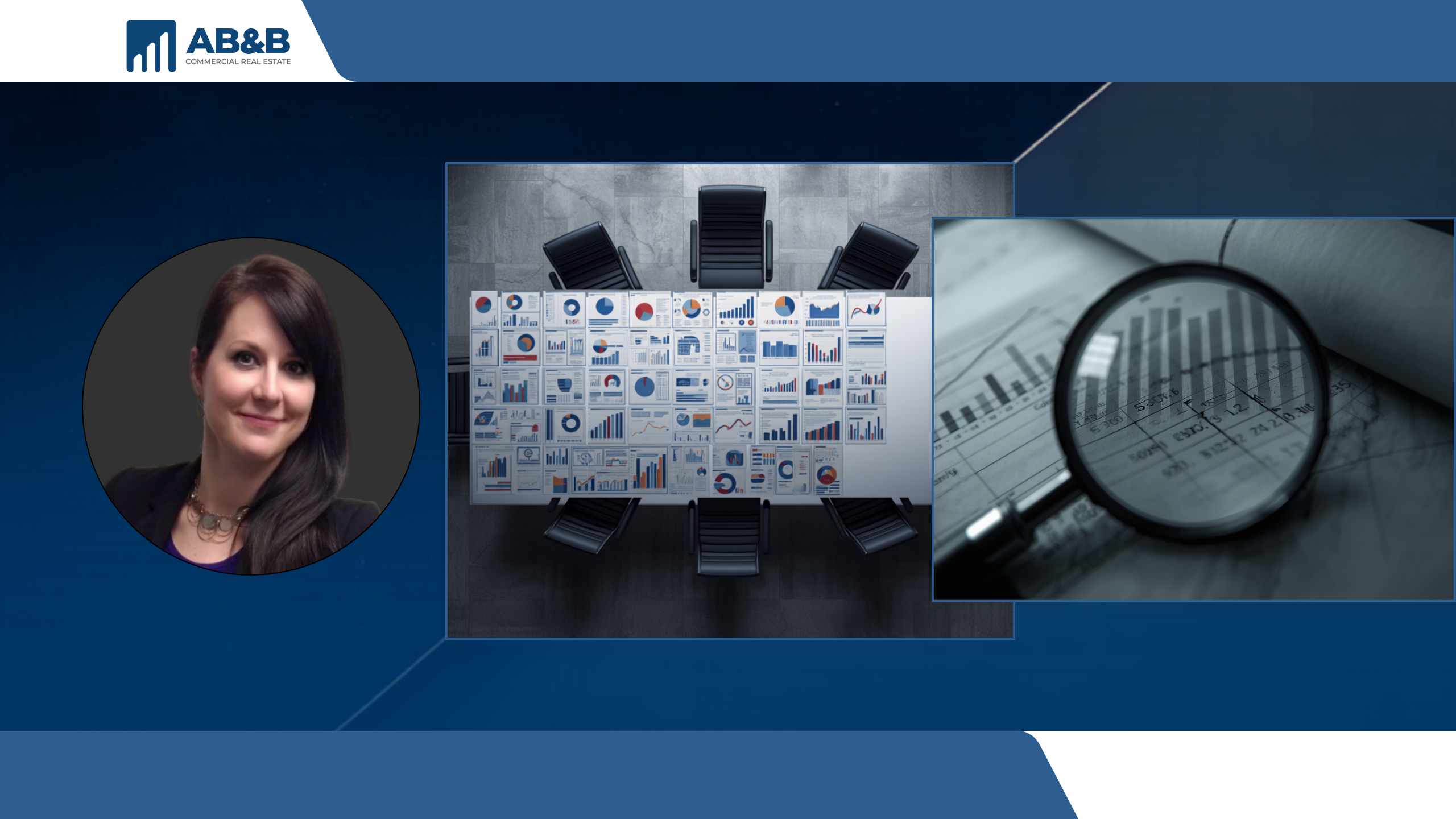
The Numbers Behind Your Building: How Kathy Corbett Keeps AB&B Thinking Long-Term

September 20, 2026

Kathy Corbett graduated high school at sixteen and stepped into a mailroom at a local company, making copies and delivering packages while attending college full time. One day, the accounting manager came by her desk, stressed because his accounts payable clerk had just left unexpectedly, and asked if she’d be interested in interviewing for the role. She said yes. Her mother said, “Take the job. It will pay you in experience.” She said yes…her mother was right.

Over the years, Kathy has worked in residential property management with portfolios of 800 units in Phoenix, built an HR department from scratch that hired 300 people in two years for a university system, navigated a real estate crisis at Northgate in Durham by restructuring operations in real time to save a 47 million dollar deal, and managed multifamily portfolios that doubled in size.. Through all of it, she learned the same lesson: operations and finance are not separate conversations, and they absolutely inform each other.

When a company’s financial picture is clear and accurate, leadership makes better decisions. When it’s murky or inconsistent, everything gets harder.

The Structure That Wasn't There

When Kathy joined AB&B in September 2025, the accounting function had significant opportunities to strengthen financial controls, consistency, and property-level reporting.  Kathy led a comprehensive cleanup of the portfolio, establishing stronger reconciliation procedures, validating balance sheet accounts, and creating greater consistency across properties.

From Kathy’s perspective, this wasn’t a sign of carelessness. It was a sign that the financial structure hadn’t yet caught up to the complexity of what AB&B had become. The CFO was managing global financial strategy and investor relationships. The accounting team was processing transactions. No one was standing in the middle, asking whether the property-level numbers made sense and holding people accountable to consistent standards.

Kathy’s first move was to build structure. For every property, she created a workbook that showed the monthly trial balance and tabs for every account that fluctuates: bank statements, loan payments, credit cards, security deposits, tax reserves. Every month, every accountant proved their work tied out to the numbers in their property management system. She created a month-end calendar so deadlines couldn’t slip. She assigned specific properties to specific accountants so ownership was clear and responsibility couldn’t hide behind ambiguity.

Then, behind the scenes, she spent weeks researching and reconciling what was already broken. A property might have forty thousand dollars in the security deposit account but only need twenty thousand based on actual leases. Another might have saved back four hundred thousand for taxes when the actual liability was thirty thousand. Kathy traced back through bank statements, lease files, and transaction records to understand where the discrepancies came from and fix them so the team could move forward maintaining accuracy rather than constantly chasing problems.

Finding the Gaps and Filling Them

When Kathy talks about those first months, she describes a structure with two layers but nothing connecting them. “Our CFO was at the global level looking at investor relations and strategy, and the accountants were on the ground level processing daily transactions,” she says. “There was just nothing in between.” That middle layer matters because that’s where a controller stops being someone who records what happened and starts being someone who helps leadership understand what the numbers mean and why it matters for decisions they’re about to make.

The team hired Kathy specifically because she brought both financial expertise and operational background. She’d run operations at other companies, which meant she understood what it costs to fix problems after they’re already embedded in the system. She understood the difference between growth that’s strategic and growth that’s just expansion for its own sake. She understood that when you add complexity without thinking through how you’ll manage it financially, you end up managing a portfolio that serves itself instead of serving the people building the businesses inside the buildings.

This matters to tenants because it determines whether a building you’re operating in gets reinvested in or neglected. It determines whether the ownership can make smart decisions about who to partner with, which vendors to work with, whether to say yes to an opportunity or no. When leadership sees accurate numbers and understands what they mean, they make decisions that strengthen the portfolio long-term rather than just capturing short-term opportunity.

Working Across Different Lenses

Working across the AB&B team means working with people who see the world differently. The CFO thinks in global financial terms and needs strategic context. Jimmy focuses on day-to-day operational execution and problem-solving. Dr. Baky pops in with specific questions and needs direct, relevant answers. Rather than expecting them all to see the numbers the same way, Kathy frames the same information differently depending on who she’s talking to and what they’re trying to accomplish.

She also works alongside people like Cindy, the construction project manager, and Brett, the asset manager, on specific initiatives. When AB&B calculates tenant allowances or project management fees, Kathy’s sitting in that conversation. When they worked through the TICAM calculations (tenant improvement cost accounting that determines who pays for what), several people initially had some piece of responsibility and ownership became unclear. By the time Kathy arrived, the work had stalled at fifty percent done for the year. She simplified the approach: she would interpret each lease and document the terms, Ciaran, the systems administrator, would input the data into the property management system to calculate accurately, and they would finish together. By the March deadline, 75 percent were complete, and the remainder followed by May. Next year, running the same calculations will take a fraction of the time because the structure is in place.

Growth That Makes Sense

As AB&B has expanded to 26 properties across multiple states and markets, including managing Triangle Family Dentistry (TFD) locations as they grow beyond North Carolina, Kathy has thought carefully about what structure needs to hold all of that together. Early in her tenure, she pushed back on leadership with a simple principle: intentional growth requires clarity about what you’re actually trying to achieve.

She’s seen this play out at other companies. At one previous company where they established clear goals around unit count, property class, and margins, the team could evaluate opportunities quickly and say no to deals that didn’t fit, even if the money looked good in the moment. At another company where goal-setting was less disciplined, the portfolio became scattered across markets and property types that required completely different management approaches and drained resources trying to service them all.

When AB&B took on a property in Rockford, Illinois through a partnership arrangement, it made sense in that specific context. But it also highlighted something Kathy wanted leadership to think about: not all properties are equally scalable from a financial perspective. Managing TFD locations across states requires consistent systems because dental practices operate with similar expense patterns and revenue structures. Managing a varied portfolio of office buildings, retail centers, and special-purpose properties means accounting for complexity that multiplies as you grow. Growth that clusters properties strategically is easier to manage than growth that scatters them. That affects how efficiently AB&B can operate and ultimately how much of the team’s energy goes toward managing the portfolio versus investing in the buildings themselves.

The leadership team listened to that perspective. The insight was valuable, and it informed how the team thinks about future expansion. What matters about that conversation is not whether every opportunity gets approved or rejected, but that the decision happens with full understanding of what each type of growth actually costs to manage well.

What Has to Stay Constant

Five years from now, AB&B will manage more properties and more complexity. The accounting systems Kathy put in place will expand to accommodate growth. But what can’t change is the core principle: every property’s financial condition is visible and accurate, ownership of accounts is clear, and the team knows what the numbers mean.

That matters because AB&B’s strength as a partner to the businesses inside their buildings depends on being able to make smart decisions quickly. An owner who can see the property-level financials clearly can decide to invest in tenant improvements because she knows the property’s cash flow supports it. Leadership that understands actual costs versus budgeted costs can evaluate partnerships and vendors accurately. A team that reads the same financial language can coordinate around decisions without misunderstanding what’s actually happening.

Kathy started in a mailroom, delivered packages, and was offered a chance to learn. The chance she took led her to understand that the difference between a company that scales well and one that becomes increasingly inefficient often comes down to one thing: does everyone see the same numbers, and do they understand what those numbers actually mean? At AB&B, that’s the role Kathy plays. She makes sure the answer is yes. That’s what lets everything else work.