From the Roof to the Blueprint: Cindy Cohen on Construction, Care, and Community

March 11, 2026

When Cindy Cohen was four years old, she climbed onto the roof with her dad.
Not because she was told to. Because she was curious.

Construction wasn’t a career path she “discovered” later in life. It was part of her world from the beginning. She grew up around tools, materials, job sites, and the quiet pride that comes from building something well. Her grandfather worked in a shipyard, where craftsmanship and precision mattered. Her dad worked in construction. There was always something being built or fixed or improved.

She remembers one early lesson clearly: don’t cross the tape line. Even as a kid, she understood there were rules, processes, and safety boundaries for a reason.

That curiosity didn’t fade as she grew up. It sharpened.

Over the years, Cindy has flipped more than a dozen homes, managed acquisitions from $300,000 to $12 million, and overseen projects ranging from retail build-outs to mission-critical facilities. She’s worked nationally and internationally, led due diligence and capital planning efforts, and brought hundreds of spaces from concept to ceremonial opening.

For her, renovation isn’t theoretical – it’s lived experience, from drywall dust to development review meetings.

Today, as AB&B’s Construction Project Manager, that same curiosity still drives her. Only now, instead of following her dad up a ladder, she’s leading complex property improvements across the portfolio including due diligence, budgeting, tenant upfits, and large-scale revitalization efforts.

And she still looks at buildings the same way she did as a kid:
What can we improve?
What needs attention?
What could this become?

What Cindy Actually Does (And Why It Matters to Tenants)

Cindy oversees capital improvements, tenant build-outs, and construction planning across AB&B properties. But in her words, it’s not just about “the big projects.” It’s about the details. With decades of experience across commercial, healthcare, industrial, and mixed-use environments, she brings a depth of perspective that helps tenants avoid costly missteps before they happen.

When she walks a property, she notices the elevator that doesn’t level perfectly. The door sensor that doesn’t close smoothly. The lighting that could feel warmer. The drainage that needs adjusting before it becomes a problem. Those things matter –  because tenant experience is built on more than square footage.

If you’re a tenant planning an upfit or renovation, Cindy often reviews drawings early in the process. She helps identify potential city requirements, building constraints, or scope gaps before they cause delays. Her advice is simple: bring her in early. The earlier she sees plans, the more she can help smooth the path forward.

And if a tenant isn’t sure where to start? The property management team is the first call, and from there, Cindy and Asset Manager Brett Earp are looped in as needed to support execution.

Full Circle at MacGregor Village

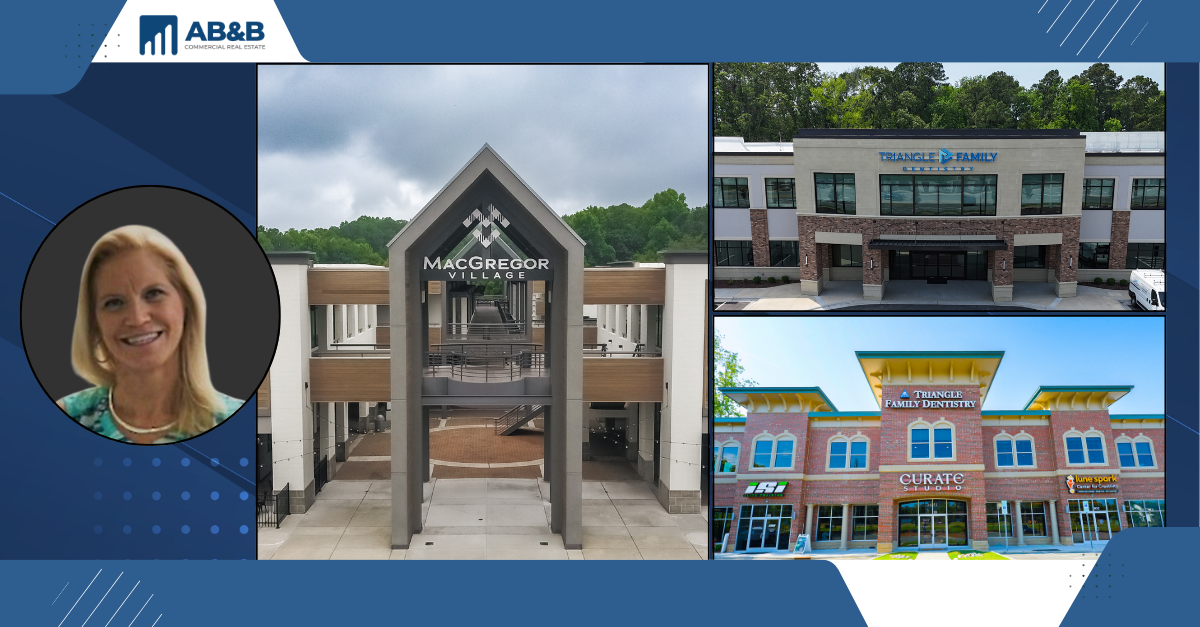
Few projects capture Cindy’s approach better than MacGregor Village. Long before she was managing improvements there, she and her friends were spending weekend nights there dancing the night away in the ‘90s. Fast forward to today — she’s helping revitalize the same property.

When she first revisited the site in a professional capacity, one detail stuck with her: the fountain was broken. It had been part of the center’s identity for years. “I hated seeing it like that,” she said. Fixing it wasn’t a flashy capital project. It wasn’t a major redevelopment. But when the fountain was restored and turned back on, tenants noticed immediately. They thanked her. Because small improvements change how a place functions, and how it feels.

Under her oversight, MacGregor has seen refreshed planters, updated seating, lighting improvements, and renewed attention to shared spaces. It’s not about “lipstick on a pig,” as she jokes, but about thoughtful revitalization that respects both budget and long-term value.

You can hear the HGTV in her when she talks about it…that dream of snapping her fingers and seeing the finished product. But she’s quick to laugh and add: it doesn’t work that way. Real improvement takes sequencing, budgeting, negotiation, and collaboration.

The Beehive in Action

Cindy doesn’t work in isolation. Across AB&B’s portfolio, construction decisions are rarely standalone because they often intersect with asset strategy, architectural vision, and long-term capital planning.

She aligns daily with Asset Manager Brett Earp to prioritize projects across properties, balancing urgency with budget and long-term value. With Dr. Jonathan Boes, she collaborates on strategic approvals and broader portfolio planning. And alongside AB&B’s architect, Richard Redfoot, she helps translate vision into execution, ensuring design decisions are both practical and durable.

That coordination matters. Capital improvements affect operating budgets. Design decisions affect tenant experience. Sequencing affects disruption. Every project touches more than one department, which is why alignment isn’t optional…it’s operational.

Some conversations happen in scheduled meetings. Others happen in quick texts when timing matters. Construction projects can move quickly, and they can go sideways just as fast. Cindy’s role is to anticipate obstacles before they become disruptions. She sees the bigger picture while protecting the smaller details.

That’s how improvements move from concept to completion without losing sight of tenant impact.

Due Diligence: What Happens Before You Ever See a Change

When AB&B acquires a new property, much of Cindy’s work begins long before any visible improvements take shape. She assesses structural systems, identifies deferred maintenance risks, evaluates lifecycle timelines, and helps prioritize capital investments. The work isn’t flashy. It rarely makes headlines. But it determines whether a property performs well for the next decade or becomes reactive and costly.

Concrete spalling. Façade wear. Roofing integrity. Drainage systems. Mechanical lifespan. These aren’t glamorous conversations, but they are foundational ones. Cindy approaches new acquisitions with a simple question: What does this building need to thrive long term?

That means balancing urgency with strategy. Some issues must be addressed immediately. Others can be phased intentionally to protect cash flow while minimizing tenant disruption. The goal isn’t cosmetic upgrades. It’s sustainable improvement, strengthening the asset from the inside out so that when tenants walk in, what they experience feels seamless, even if the work behind it was anything but.

Women in Construction — And What Leadership Looks Like

Construction remains a male-dominated industry. Cindy doesn’t dwell on that fact — she works within it.

Over the course of her career, she has led acquisitions ranging from six to eight figures, managed complex build-outs across retail, healthcare, and mission-critical environments, and overseen projects that require both precision and pressure-tested decision-making. She’s spent decades in rooms where expectations are high and margins for error are low.

Her credibility was built the same way any structure is built: layer by layer, detail by detail.

Today, she channels that experience into mentorship. Through STEM outreach and informal coaching, she encourages young women to consider construction not as a novelty, but as a serious and rewarding path. “You don’t have to choose between being creative and being technical,” she often says. Construction is both.

It’s problem-solving and design. Budget discipline and imagination. Strategy and execution. Cindy doesn’t present herself as an exception in the industry. She presents herself as proof that expertise, preparation, and follow-through speak louder than anything else.

Construction, Care, and Community

At its core, Cindy’s work is about stewardship. She wants tenants to feel supported, properties to feel intentional, and improvements to stand the test of time. That commitment has been consistent from the very beginning — from climbing rooftops as a child to overseeing multimillion-dollar improvements across AB&B’s portfolio.

Over the years, curiosity became craftsmanship, and craftsmanship became leadership. Today, that leadership shows up in quiet but meaningful ways: a smoother build-out process, a restored fountain, a phased capital plan that protects both budget and tenant experience.

Most people will never see the sequencing, negotiation, and long-range planning behind those improvements. But they feel the difference when a space functions better, looks sharper, and supports their business more effectively.

At AB&B, buildings don’t improve by accident. They improve because people like Cindy are paying attention — anticipating what’s needed, protecting what matters, and doing the work long before anyone else notices.