The Buildings Were the Asset

August 6, 2026

Most investment platforms have a founding story. This one has a foosball table.

In 2001, Jonathan Boes and I were co-op interns at a voice-over-IP startup called Jetstream on NC State’s Centennial Campus, where we sat next to each other in pods, spent months playing foosball and ping pong together, and listened to a colleague talk about his brother who was a dentist in Florida: golfed every Friday, barely worked three days a week, did really well. When Jetstream ran out of funding and shut down, we went our separate ways.

Two years later, we both showed up on the first day of dental school at UNC Chapel Hill, and neither of us knew the other had applied. What are the odds of that? Slim to none, and I’ll tell you exactly that.

That accidental reunion is where everything that followed was seeded: two engineers who loved building things found themselves in dentistry together and eventually realized they wanted to build something much larger than a practice.

The Lesson That Started Everything

Before there was a fund or a platform, there was a mentor.

I had a close family friend growing up who had built one of the biggest wholesale travel agencies in the northeast, with serious revenue and dozens of locations, and then Expedia came along and the business collapsed almost overnight. What kept him afloat was that he had been quietly buying the real estate behind his offices for years, so when the ticket business died, the buildings survived. His advice to me was blunt: always own the real estate.

That lesson shaped the first major decision Jon and I made beyond our dental practices. We bought our first building, the Wake Forest office, not as a sophisticated investment move but as a matter of security, because we had spent years building a patient base and had no interest in being at the mercy of a landlord who could change the terms or sell the property out from under us. The building was the foundation, and what came next arrived almost by accident.

The Courthouse Steps

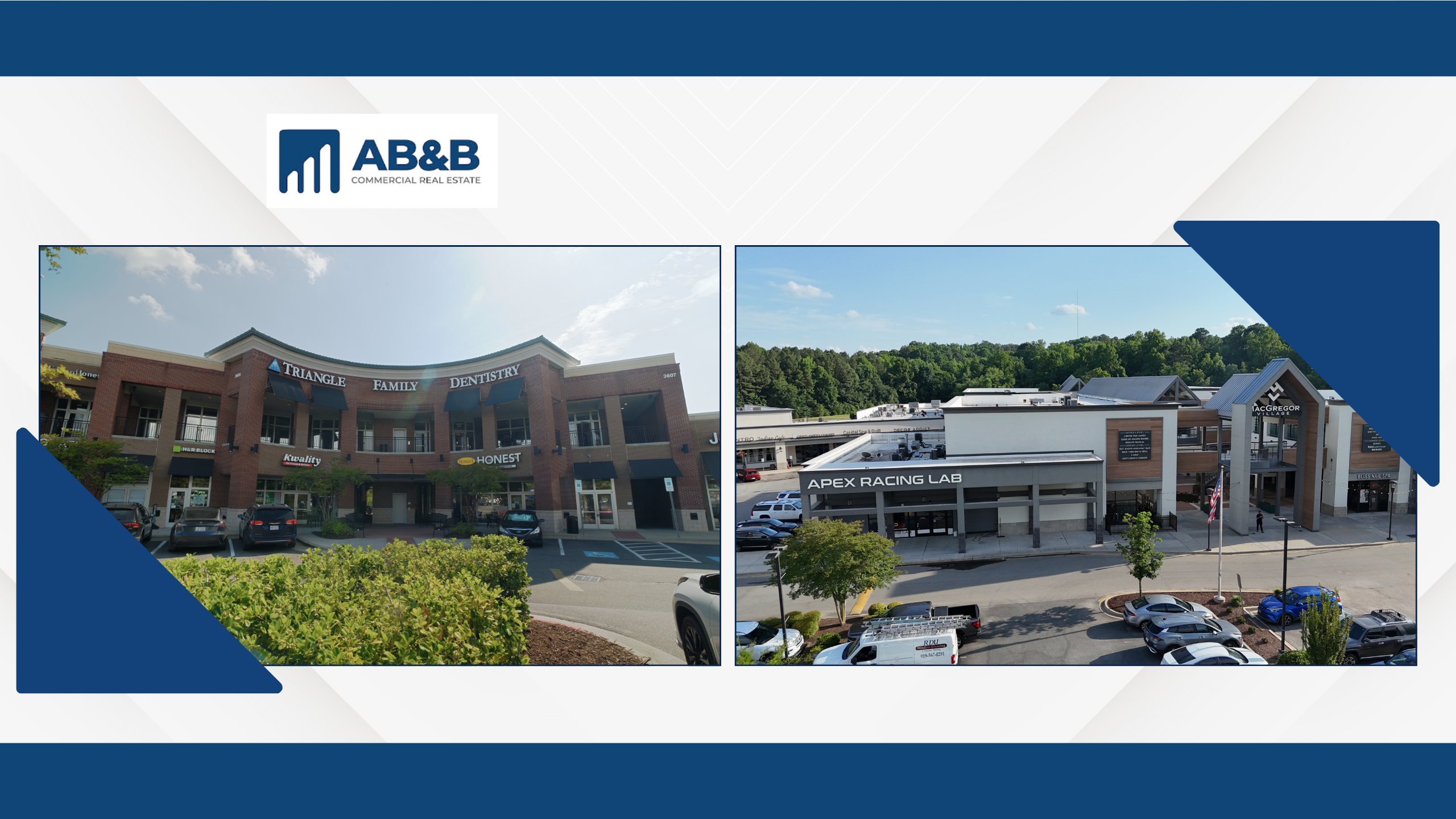
In 2010, the Morrisville plaza where Triangle Family Dentistry had opened its first location went bankrupt. The developer went under, and most tenants found out when it happened, but I found out months earlier because, on the advice of my attorney, TFD had registered our lease: a legal step that triggers notification any time something changes with a property’s ownership. Most tenants don’t do this, and most don’t even know it’s possible.

The property was listed at $3.2 million, and to bid I needed 10% down: $320,000 in cash. The problem was Jon and I had just opened a second office and were cash poor, so I did what founders in tight spots do. I reviewed every asset I had, called my dad and close family friends for help, and pulled together $320,000.

Then a private equity group from Atlanta showed up and outbid me, the price jumped, I put in more, and they outbid me again. I kept going, and then, in the way that occasionally happens when timing and will line up correctly, I got lucky: the other group walked away and I won the bid.

Then I had 30 days to close with no financing in place. I went to Wells Fargo and sat down with a banker named Michael Crook, who said 60 days was the minimum, and I told him I would move every asset I had to Wells Fargo if he could make it happen in 30. He made it happen, I moved my assets to Wells Fargo, and I still bank there today.

I paid $4 million for Bethany Village in 2010, and we still own it: a foundational asset that fits every criterion in the buy box I would spend the next decade refining.

Two Partners, One Platform

For the next decade, the model was consistent: every practice we opened, we tried to own the building, and the heat mapping and permitting data we had developed to identify dental locations also told us where real estate values were heading, often years before the broader market caught on.

Jon brought something distinct to the partnership. Where I operated at the level of markets, data, and deals, he operated at the level of buildings, materials, and design, and as a fellow computer engineer with a background in construction he stayed hands-on through every project: working alongside architects in CAD, showing up on job sites, and designing spaces that felt warm rather than clinical.

Each building had its own character: one incorporated reclaimed materials from an old tobacco shed on the land, another featured timber framing details he had been studying for years on his own time, and these were decisions made by a builder who genuinely cared about what he was creating and understood that the physical environment shapes patient experience in ways that never show up on a pro forma.

The result was a portfolio of healthcare properties that performed better than market comparables because the operator-tenant and the landlord were the same entity, which meant that when the dental practice succeeded the building value increased, and when the building needed to pivot the decision could be made in weeks rather than months because there was no adversarial negotiation between tenant and landlord. One team, one decision.

The Team That Changed Everything

The dental platform continued to grow under Lightwave following the 2019 exit, and the real estate portfolio kept expanding alongside it, but growth had outpaced the infrastructure supporting it: the properties were performing, and nobody had ever put the full picture together in one place.

That changed when Jimmy Ricard joined as COO. His first task was operational: bring order to a portfolio that had been built deal by deal over a decade, each property managed and tracked in its own way. He organized the holdings, standardized the reporting, and built the operational foundation that made a clear financial picture possible for the first time, and it was unglamorous work that made everything else visible.

With the portfolio organized, we brought in Gerhard Renner as fractional CFO in late 2021. Gerhard had spent over 25 years in corporate finance, mergers, and venture capital, including his role as a founding member of Scale Finance, and he was the right person to look at the full picture and say what it actually meant.

So he ran the numbers across dental operations, real estate holdings, and everything together, and then he came back with a specific observation: the net worth sitting in the real estate portfolio exceeded what I had generated from the dental exit.

I had spent over a decade believing the dental business was the primary asset, and the buildings were the primary asset all along. I just hadn’t had anyone put the full picture together until then.

That revelation reframed everything, because the real estate had not been a side strategy supporting the dental business: it had been a parallel wealth engine compounding quietly for fifteen years while everyone’s attention was on the practices. The two things had always been connected, and now, for the first time, the connection was documented, quantified, and impossible to ignore.

Opening the Door

For years, people had been asking to invest alongside me: colleagues, partners, fellow doctors who watched what I was building and wanted access. For a long time, my honest answer was no, because I didn’t want the responsibility of managing other people’s capital on top of everything else I was running.

That changed once the financial picture came into full focus, and the question shifted from whether to open the platform to outside investors to how to do it properly.

The Blue Ridge Capital Fund came together at the end of 2023 and launched officially in 2024. The investment thesis was straightforward and differentiated: healthcare-anchored retail and medical office in high-growth markets, underwritten by an operator who understood both sides of the transaction. The fund was built around a framework targeting specific exit thresholds across cap rate, lease rate, occupancy, and weighted average lease term, and Jimmy, Gerhard, and I anchored the GP team with defined roles covering vision and operator intelligence, execution, and financial strategy, while three other partners rounded out the group.

In October 2024, we hosted an investor event at Apex Racing Lab at MacGregor Village in Cary, one of our own properties, and the evening combined racing simulations with presentations from the GP team, food from Donovan’s Dish (a tenant in the same building), and a portfolio update that told the story clearly: $15 million raised, Villages on Main Street closed at $15 million with a $21 million appraised value, The Glennon closing weeks later, and New Hill under construction in Holly Springs. The room was full of doctors, partners, and investors who had been watching what we built and were ready to be part of what came next.

Two months later, at a family office conference in Miami, we sat down with a different kind of audience: institutional capital allocators and family office principals evaluating funds on fundamentals rather than relationships. The conversations that began there confirmed what the Apex Racing event had shown from the investor side, which is that the strategy held up at multiple levels of sophistication and we were attracting serious attention from people who had seen a lot of deals and were choosing to look more closely at ours.

By the end of 2025, the Blue Ridge Capital Fund had closed its deployment, and every LP had invested alongside a GP team that put their own capital into every deal, because that structure was non-negotiable from the beginning: if it was not good enough for me to invest in personally, it was not good enough to offer anyone else.

The through-line across all of it, from the Wake Forest building to the Bethany Village courthouse steps to the BRC Fund, is the same principle a mentor shared with me decades ago over a conversation about a travel agency that almost didn’t survive.

Own the real estate. Build around it. Let it compound. One building at a time.

About Dr. Hesham A. Baky

Dr. Hesham A. Baky is the Founder and Chairman of AB&B Commercial Real Estate and Vantico Investments, and a co-founder of Triangle Family Dentistry and Carolina Orthodontics & Children’s Dentistry. Since launching his first practice in 2009, he has helped scale a vertically integrated platform spanning healthcare operations, commercial real estate, and private investment. Dr. Baky regularly speaks on leadership, systems-driven growth, and operator-led investment strategy.

To inquire about speaking engagements or to connect, please contact marketing@abbcre.com.