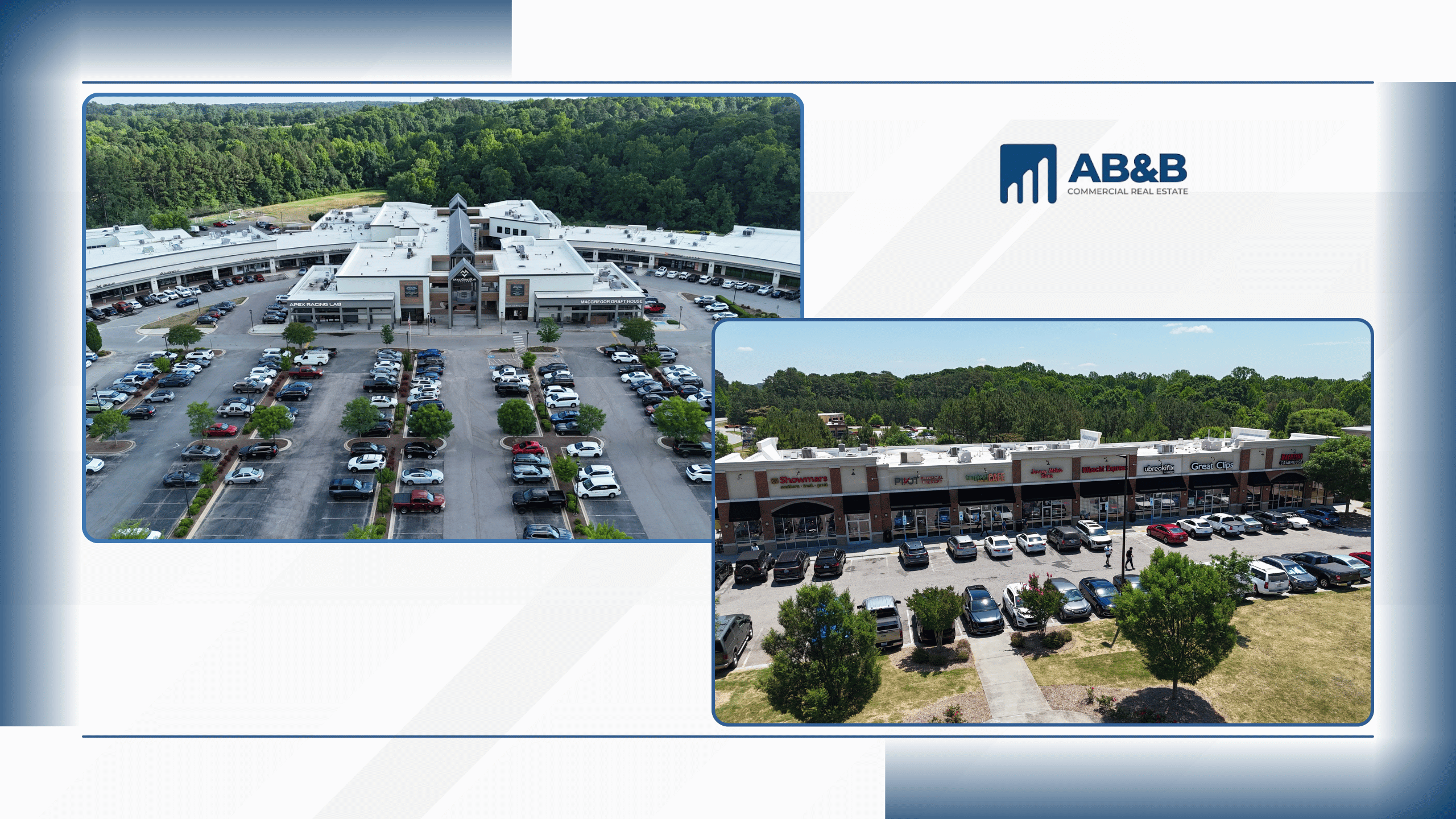
Most people buy real estate when it feels safe. I buy it when it doesn’t.
That’s not contrarianism for its own sake. It’s a discipline built on a simple observation: the best opportunities in real estate don’t announce themselves. They hide inside market narratives that are partly right, temporarily amplified, and eventually proven wrong by the one thing that doesn’t change…human behavior.
I’ve made this bet twice in my career with meaningful capital behind it. Once in retail during COVID. Now in office. Both times the market told me I was wrong. Both times the data told me otherwise.
The Dental Exit and the Problem of Cash
In December 2019, I completed my first private equity exit. Triangle Family Dentistry and Carolina Orthodontics & Children’s Dentistry had partnered with Lightwave Dental. Three months later the world shut down.
The timing was dumb luck. But what came next was not.
I had significant capital to deploy at exactly the moment retail real estate was in freefall. REITs were shedding assets they didn’t want to carry. Banks had stopped lending on retail entirely. Shopping centers that had traded at healthy cap rates a year earlier were sitting on the market with no buyers.
The narrative was clear and loud: retail is finished. E-commerce had already been eating it alive, and now a global pandemic had given people permission to never leave their houses again. Every serious investor I knew was staying away.
I looked at the data differently. Healthcare professionals are trained to think in systems. When a patient presents with symptoms, you don’t just treat what you see, you figure out what’s actually driving it. The retail sector was presenting symptoms. The question was whether the diagnosis was terminal or temporary.
My diagnosis was temporary. Not because I was optimistic, but because I understood human nature. Nobody actually wants to be home full-time. People need social interaction, shared experience, physical presence. They were going to go back to restaurants, gyms, retail centers, and gathering places, not for convenience, but because they’re wired for it. The pandemic was a disruption, not a transformation.
So while everyone else was selling, I started buying.
The Galleria: A Deal the Banks Wouldn't Touch
The most instructive deal from that period was the Galleria shopping center in Charlotte, North Carolina.
A REIT wanted it off their books. The asset was sitting at roughly 65% occupancy. This was not catastrophic, but distressed enough that in a climate where banks had stopped lending on retail altogether, it had no obvious buyers. They needed to sell. I needed to deploy capital into depreciable assets for tax purposes. The timing aligned even if the risk didn’t feel comfortable.
The problem was financing. Every bank I approached turned me down. Nobody was writing retail loans in 2020. So I went directly to the seller and negotiated a deal most investors wouldn’t have taken: $5 million down with $10 million seller-financed over two years at an elevated interest rate. Two years to either refinance with a bank or pay it off in cash. No extensions. No flexibility.
I signed anyway.
What happened next was exactly what the data said would happen. Retail came back. Occupancy climbed. Tenants renewed and new ones signed. By the time the two-year window approached, the lending environment had shifted enough that conventional financing was available again. We refinanced, stabilized the asset, and eventually sold it when occupancy had reached 98%, generating the kind of return that only comes from buying something nobody else wanted at a price that reflected their fear rather than the fundamentals.
The Galleria wasn’t the only deal from that period. We also acquired Hampton Point in Hillsborough, a neighborhood strip center we purchased at a significant discount to replacement cost, along with Wake Forest Crossing in North Raleigh and Millstone in Fayetteville. All purchased during a window when retail was effectively untouchable. All recovered. Most have been sold. One is currently being repositioned with a national anchor tenant before a planned exit.
In fifteen years of investing I have not lost money on a single property. That’s not luck. It’s the result of selecting markets carefully, being patient, and never letting a loan expire at the wrong moment in a cycle.
The Pattern Repeats: Office Is Next
Every distressed asset cycle follows the same arc. Supply surges, demand drops, prices collapse, the narrative declares the asset class permanently broken, and then human behavior reasserts itself and the fundamentals recover.
I watched it happen in retail. I’m watching it set up in office right now.
The narrative is familiar: remote work has permanently changed how people use office space, vacancy rates are elevated, new construction has stalled, and the asset class is structurally impaired. There’s enough truth in that to make it convincing. Some office will never recover because they are lower quality buildings in secondary locations with outdated infrastructure and no reason for tenants to choose them over alternatives.
But Class A office in high-growth markets is a different story. No new supply is being built. Absorption is beginning to recover in select markets. And the cultural pull toward in-person work for creativity, collaboration, and team culture, is stronger than the remote work narrative suggests. Companies are figuring out that you cannot build culture through a screen. The office isn’t going away. It’s evolving into something more intentional: a destination rather than a default.
So we’ve begun allocating to distressed office, targeting roughly 10 to 15 percent of the portfolio. Class A properties with road frontage in high-growth markets where absorption data shows vacancy coming down rather than rising. We’re not betting that office returns to what it was. We’re betting that the right office in the right market, bought at today’s distressed prices, will be worth significantly more in five years than it is today.
The math doesn’t require a full recovery. It just requires that we’re right about the direction.
How the Portfolio Is Actually Managed
The distressed asset thesis doesn’t exist in isolation. It’s one layer of a broader portfolio strategy that I started formalizing in 2024 shifting from managing assets reactively to running the portfolio like a family office.
That means an annual review every fourth quarter to set strategic allocations for the year ahead. Medical office buildings remain the largest anchor as they are the safest, most durable asset class I know, driven by an aging population and the irreplaceable need for in-person healthcare. Retail is being trimmed as cap rates have compressed and the COVID-era positions have largely been exited at target returns. Office is the current growth allocation, accepted precisely because it’s uncomfortable.
The framework is simple: anchor in what’s durable, harvest what’s peaked, and allocate a measured portion to what’s distressed. Not because distress is exciting, but because distress, when the underlying fundamentals support recovery, is where the returns are.
The key word is measured. I’m not putting 50% of the portfolio into office because I’m confident the thesis is right. I’m putting 10 to 15% in because I’m confident enough in the direction while acknowledging that timing a cycle is never precise. Conviction and concentration are different things. Knowing the difference is what keeps a fifteen-year track record intact.
What the Pattern Actually Teaches
Looking back across the retail play and now the office thesis, the through line isn’t a formula. It’s a posture.
When a market is distressed, most people ask whether it’s safe to buy. I ask whether the narrative driving the distress is permanent or temporary. If the answer is temporary, meaning if human behavior, demographic reality, or basic supply and demand says the fundamentals will recover, then the only real question is whether I can structure a deal that survives being early.
The Galleria deal could have gone wrong. Two years was a tight window. The seller-finance structure was unforgiving. If retail had taken three years to recover instead of two, the outcome would have been different. Managing that risk was about making sure that even if the timing was off, the structure of the deal gave me enough runway to be proven right eventually.
That’s the discipline behind every distressed asset play I’ve made. Not certainty. Not bravado. Data, patience, and a deal structure built to survive being early.
The best time to buy is when everyone else is selling. But only if you’ve done the work to know why they’re wrong.
About Dr. Hesham A. Baky
Dr. Hesham A. Baky is the Founder and Chairman of AB&B Commercial Real Estate and Vantico Investments, and a co-founder of Triangle Family Dentistry and Carolina Orthodontics & Children’s Dentistry. Since launching his first practice in 2009, he has helped scale a vertically integrated platform spanning healthcare operations, commercial real estate, and private investment. Dr. Baky regularly speaks on leadership, systems-driven growth, and operator-led investment strategy.
To inquire about speaking engagements or to connect, please contact marketing@abbcre.com.