
You’re Not Building, You’re Just Doing: The Architecture of Repeatable Growth

March 24, 2026

Founders often mistake growth for scale.

Revenue increases. Demand rises. A second location opens. Headcount expands. From the outside, it looks like progress. But growth without structure is not scale – it’s risk. True scale requires repeatability. And repeatability requires systems.

Over the past fifteen years, I’ve had the opportunity to build and expand healthcare platforms across North Carolina, beginning with one location in 2009 and growing to more than twenty offices across multiple brands. That expansion was not fueled by ambition alone. It was driven by disciplined operating systems that made performance predictable.

Without that foundation, growth would have multiplied variability instead of value.

Momentum Is Not the Same as Scale

There is a moment in every growing business when demand begins to outpace structure. That moment is dangerous. Opening a second location because the first is busy feels logical. Hiring faster because revenue is rising feels necessary. Expanding into new markets because the opportunity exists feels strategic.

But unless the underlying model is repeatable, expansion simply magnifies inefficiencies. Research from McKinsey on operational excellence reinforces this point. Sustained performance does not come from one-time initiatives or charismatic leadership, it comes from embedded management systems that standardize execution and decision-making across the organization. Companies that fail to institutionalize those systems often see gains erode within just a few years.

Scale is not expansion. Scale is consistency under pressure.

The Replication Test

Let’s use a simple analogy. If you open a burger restaurant and the first location performs well, that does not mean you are ready to open a second. The real test is whether the second location produces the same burger—same quality, same customer experience, same margins.

If results depend on who is working that day, you don’t have a system. You have dependency.

This is why companies like McDonald’s have been studied for decades. Their success is not rooted in creativity; it is rooted in consistency. As business leaders have noted, standard operating procedures – when properly designed and digitized – create a competitive advantage by ensuring repeatable outcomes at scale.

The same principle applies in healthcare, real estate, and any service-driven business. When we began expanding our dental platform, we did not open additional locations until we could clearly document:

• Clinical protocols
• Patient experience standards
• Hiring and training processes
• Performance dashboards
• Financial benchmarks

If location #2 could not replicate the outcomes of location #1, we were not ready to open location #3. Repeatability had to be proven before expansion.

SOPs Are Risk Management, Not Bureaucracy

Standard Operating Procedures (SOPs) are often misunderstood. Founders sometimes view them as administrative overhead…something large corporations require but entrepreneurial businesses can avoid.

In reality, SOPs are risk management tools.

They protect brand consistency.
They reduce operational variability.
They create continuity when leadership changes or team members leave.
They improve compliance in regulated industries like healthcare.

Business continuity research consistently highlights that documented processes reduce dependency on individual performers and improve long-term resilience. Without SOPs, growth increases exposure rather than stability. Additionally, operational excellence research makes this even clearer: management systems – not just technology – are the backbone of sustainable performance. Without them, organizations rely too heavily on personalities, and performance becomes fragile. Systems are what allow leadership to step back without performance collapsing.

Learn the Work Before You Delegate It

One of the most important lessons in scaling is this: leaders must understand processes A–Z before delegating them. This does not mean doing every job forever. It means understanding it deeply enough to document it, improve it, and standardize it. Without that foundation:

• Delegation becomes guesswork.
• Teams interpret expectations differently.
• Inconsistency increases.
• Margins compress.
• Culture fractures.

Understanding the work enables intelligent delegation. Intelligent delegation enables scale. When systems are documented and measurable, decision-making becomes clearer, training becomes faster, and performance becomes more predictable.

The Hidden Cost of Skipping Structure

Founders who skip structure often experience the same symptoms:

• Burnout at the leadership level
• Team churn due to unclear expectations
• Inconsistent customer experiences
• Declining margins despite growing revenue

These issues are rarely caused by a lack of ambition. They are caused by a lack of operating discipline. Real builders slow down to scale faster. They invest in management systems before they chase expansion. They treat repeatability as a strategic asset, not an administrative burden.

Repeatability is the real moat. Growth without structure is just unmanaged risk. And scale without systems is just chaos with better branding.

If you cannot replicate performance predictably, you are not building a scalable platform. You are just doing more work. Systems are the difference between chaos and compounding.

About Dr. Hesham A. Baky

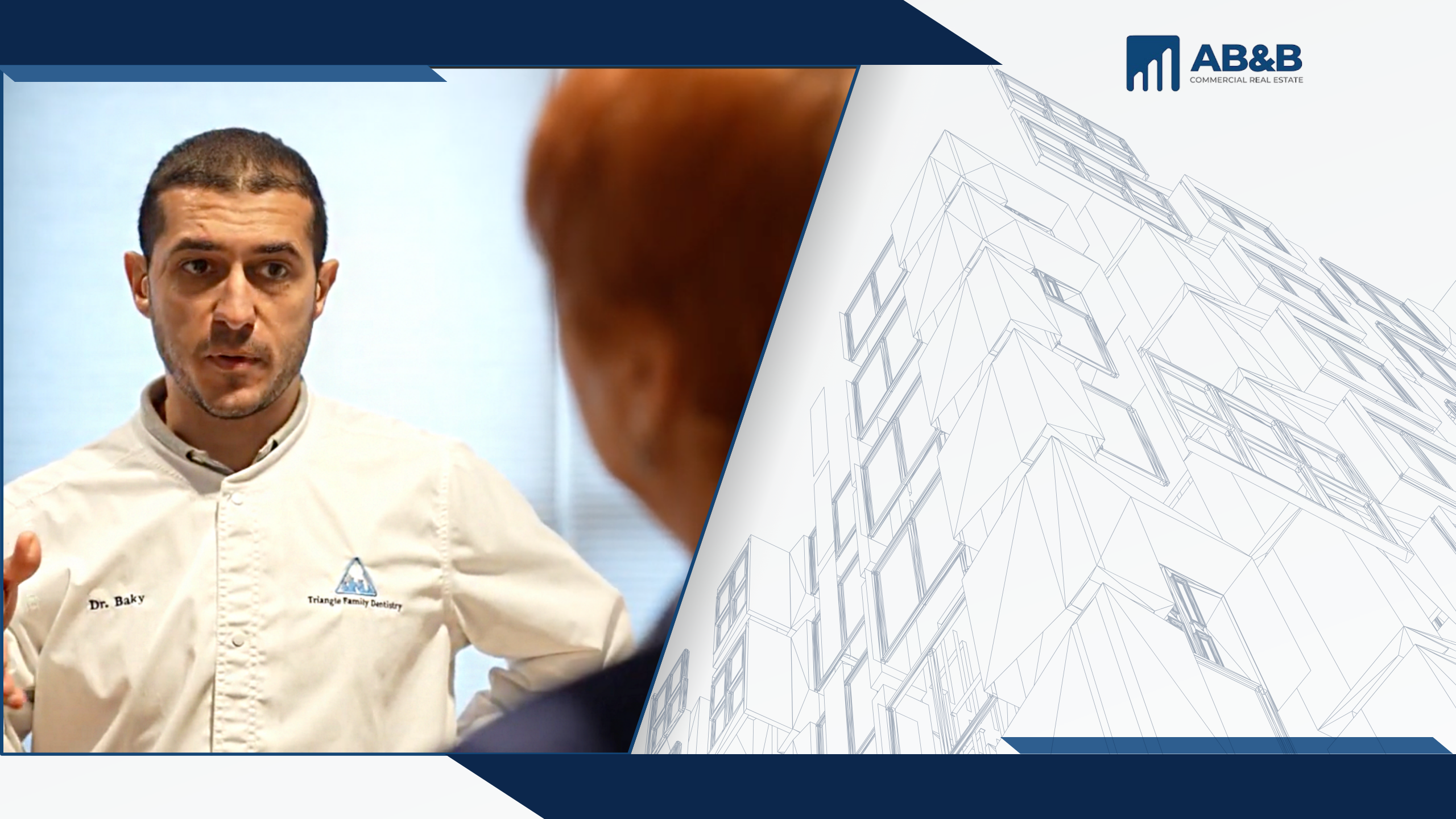
Dr. Hesham A. Baky is the Founder and Chairman of AB&B Commercial Real Estate and Vantico Investments, and a co-founder of Triangle Family Dentistry and Carolina Orthodontics & Children’s Dentistry. Since launching his first practice in 2009, he has helped scale a vertically integrated platform spanning healthcare operations, commercial real estate, and private investment. Dr. Baky regularly speaks on leadership, systems-driven growth, and operator-led investment strategy.

To inquire about speaking engagements or to connect, please contact marketing@abbcre.com.